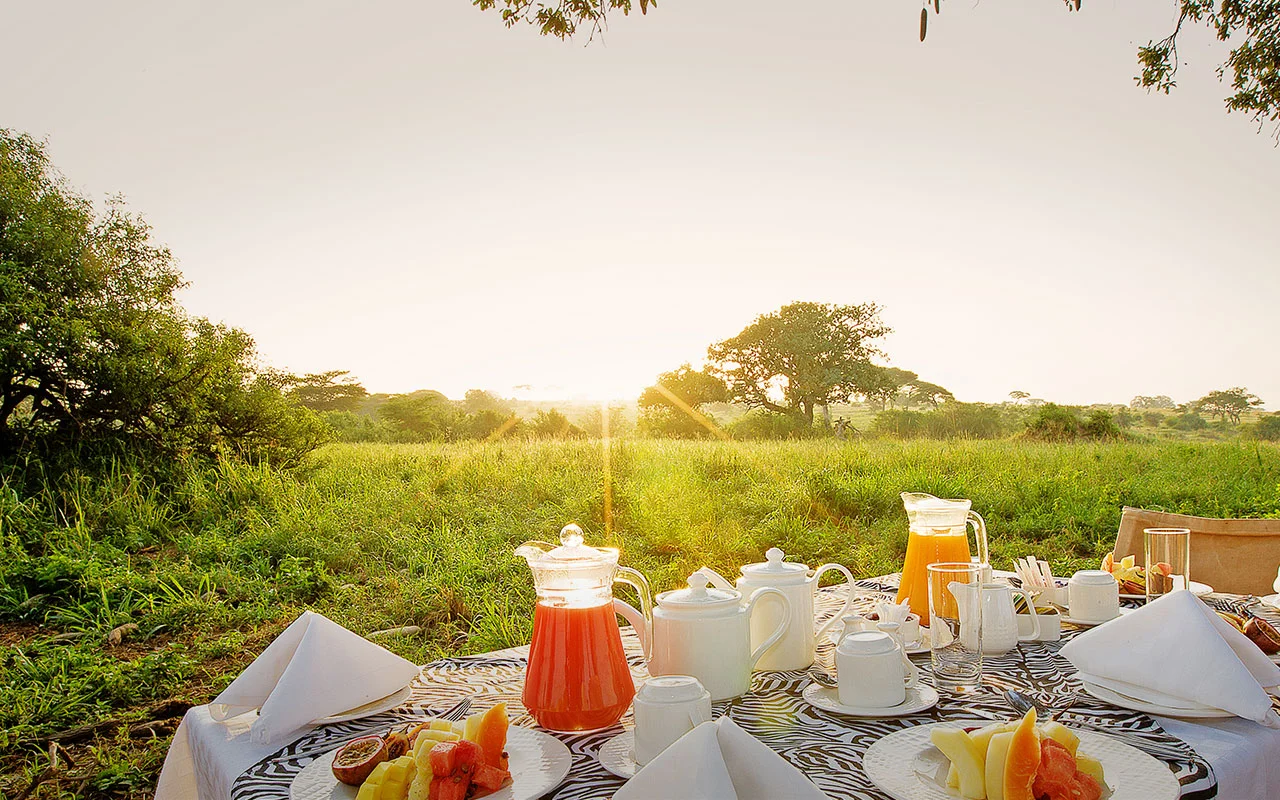
Bush breakfast is arranged after an early morning game drive. Your guide will select a quiet area at a designated picnic site where he’ll prepare a simple outdoor breakfast. Timing usually falls between early morning wildlife viewing and the return to camp. This time allows you to remain in the park longer before continuing with wildlife viewing later in the morning.
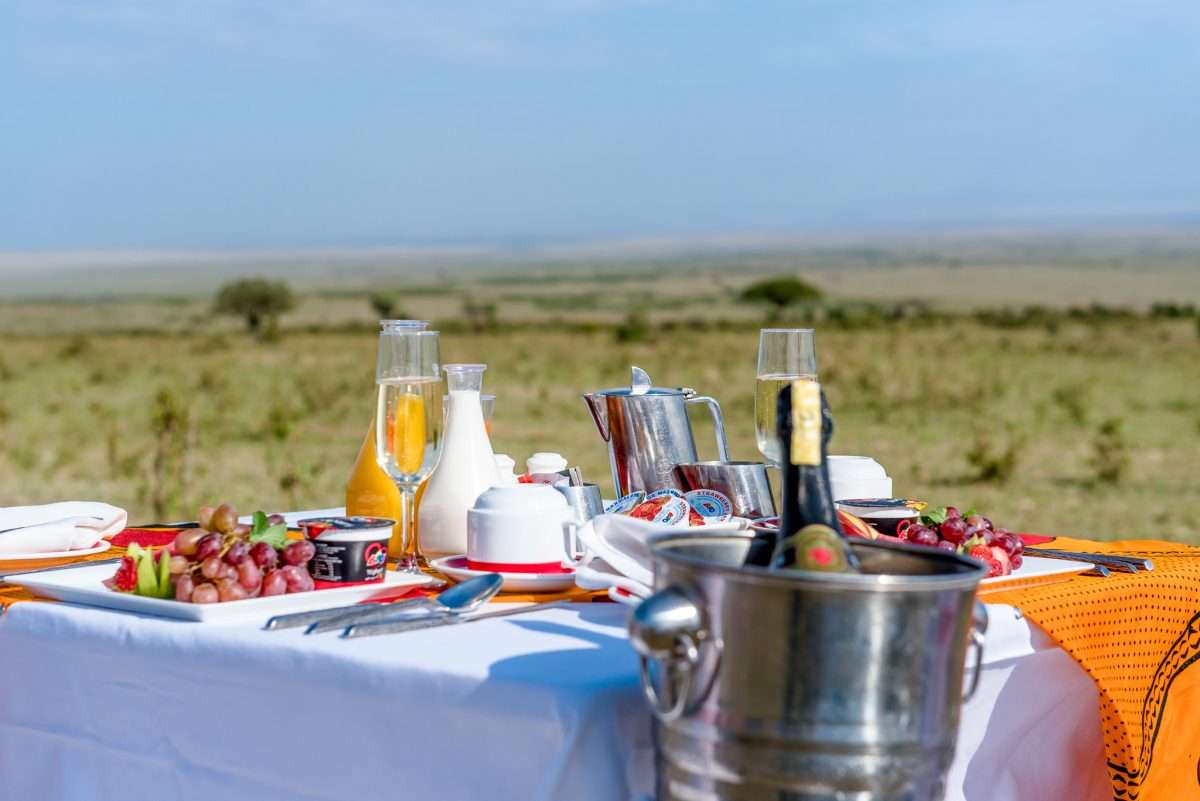
Bush lunch normally takes place during extended daytime game drives. Instead of returning to camp, you and your safari guide will stop at a designated picnic area within the park.
Food is either packed from the lodge kitchen or prepared on site by accompanying staff. Timing often falls in the early afternoon when wildlife activity slows down. This arrangement allows you to remain inside the park and continue with your game drive without having to get back to camp.
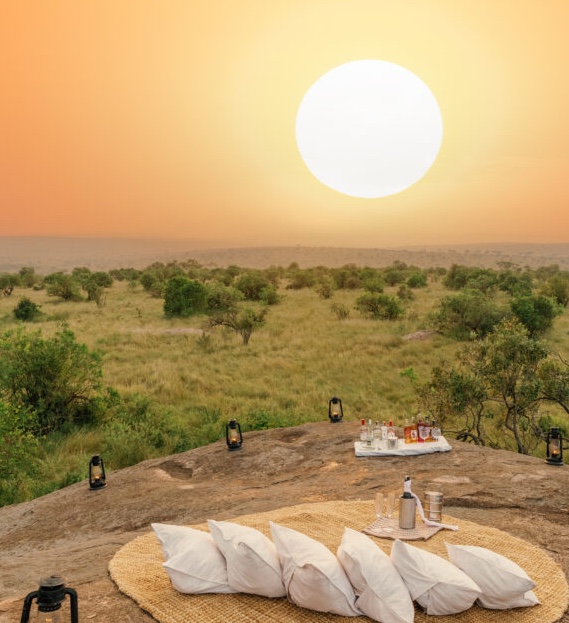
A sundowner normally takes place in late afternoon after a game drive. Your guide will stop at a scenic viewpoint where light fades over the horizon.
Drinks and light snacks are served while the temperature drops and wildlife begins to move again. This usually lasts a short period before darkness takes over. Afterward, you go back to the camp.
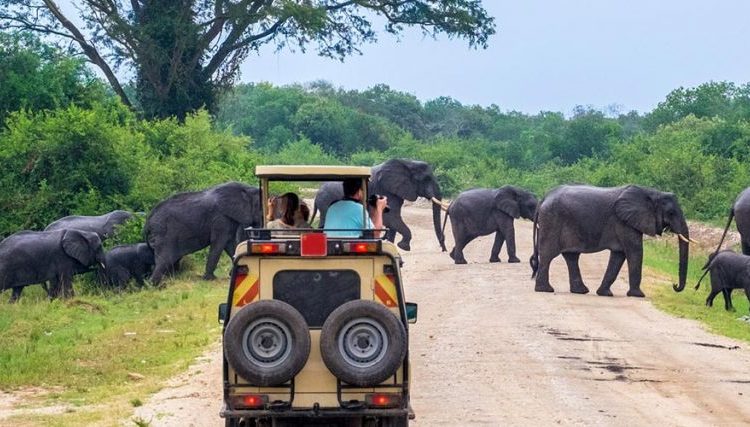
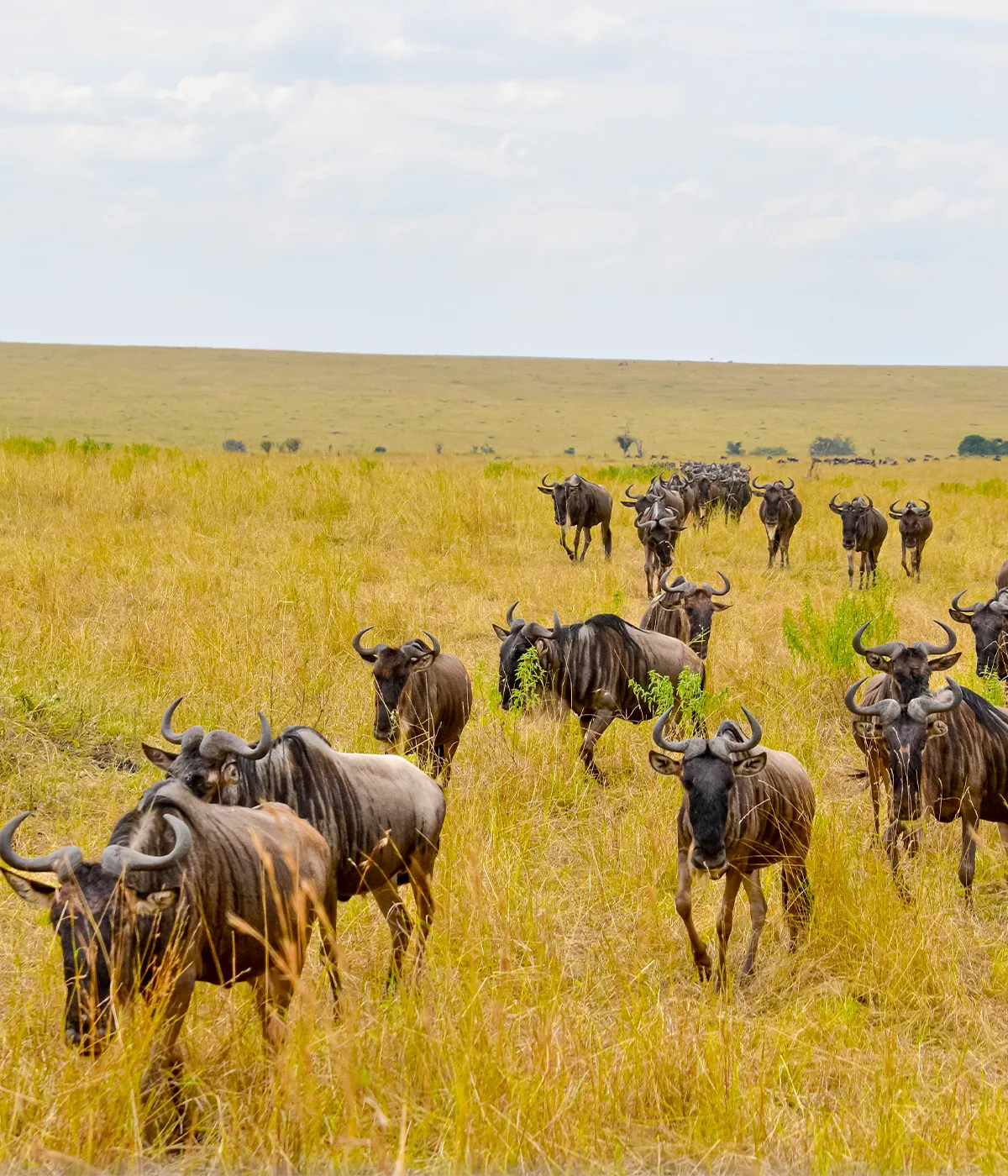
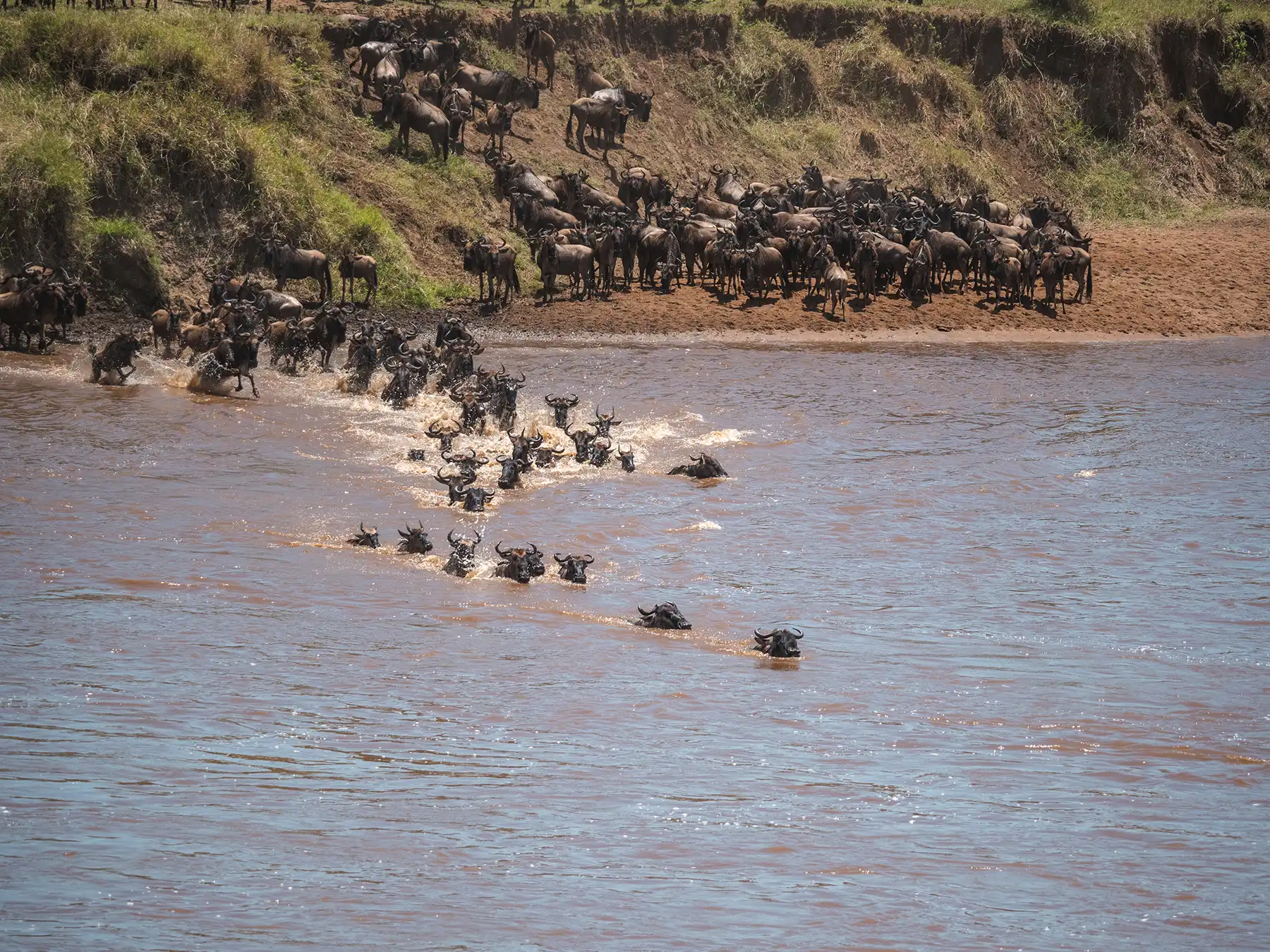
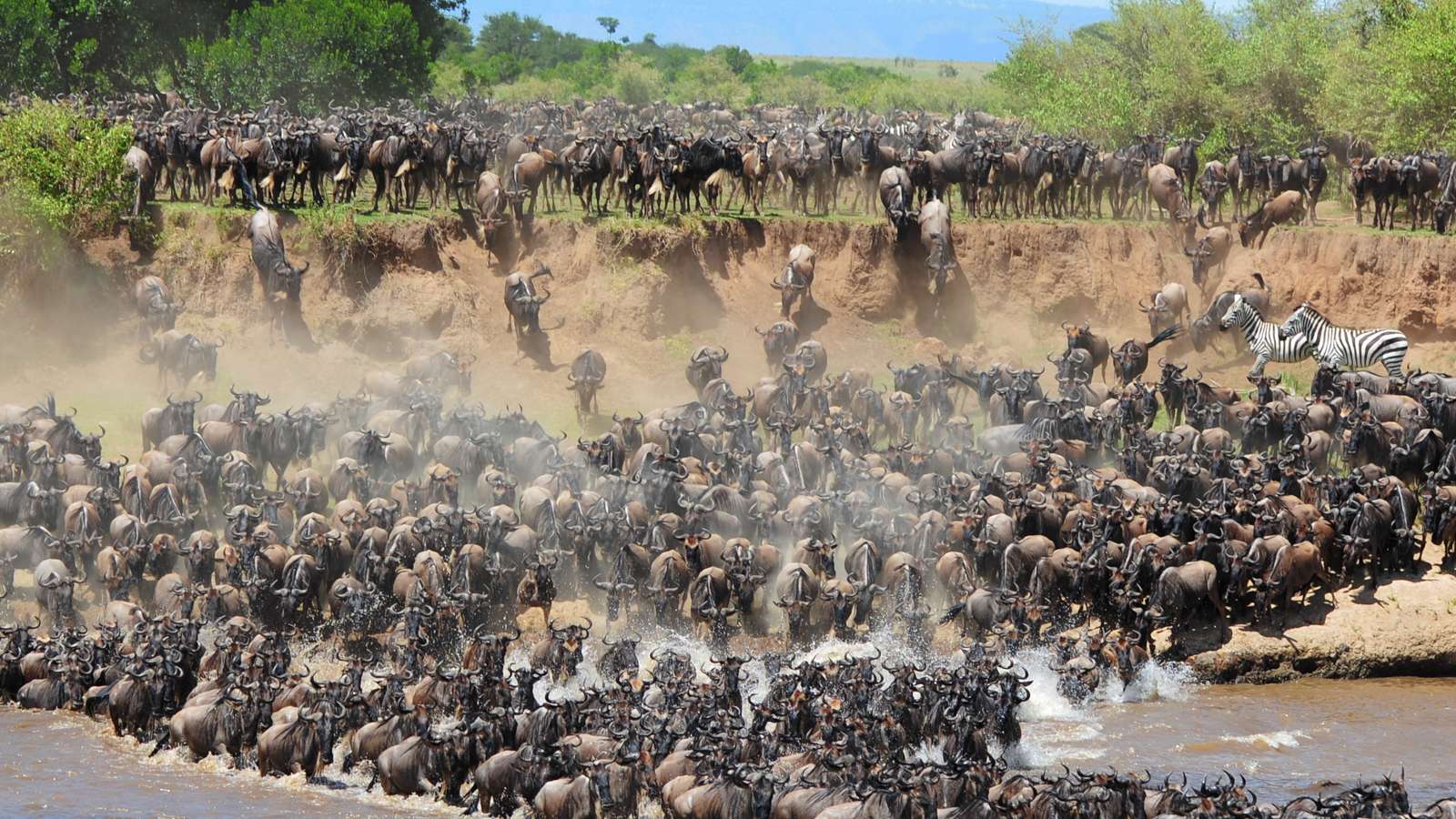
This is the typical and yet the best way to view the, literarily, astronomical wildlife. It is the most popular activity and is typically done in a customized 4x4 safari vehicle and is organized in two shifts - morning and afternoon.
To make the most of the game viewing, you need at least three days to be able to explore most part of the park you may be visiting. Expect to see most, various wildlife and avian species, dense lush forests and savanna vegetation.
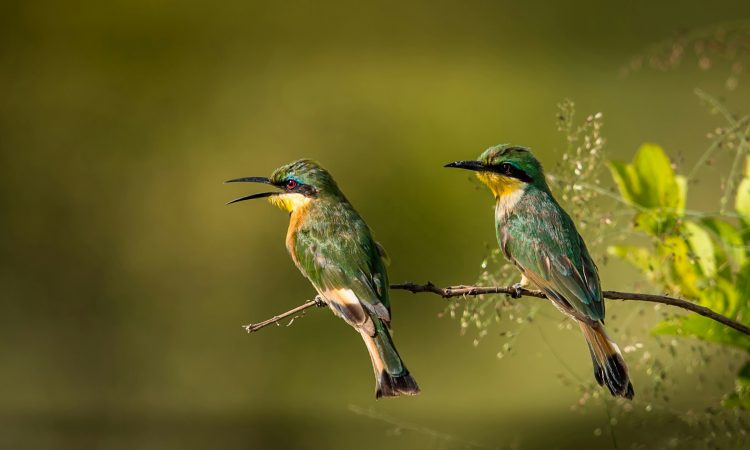
Tanzania is known to be one of the best places for birding in all of East Africa. There are many species to look out for such as the flamingos, Kori bustards, crowned cranes, just to name a few.
Even from the open plains, you can spot species like the African cytrill sights, forest buzzard, golden winged sunbirds and white eyes slaty.
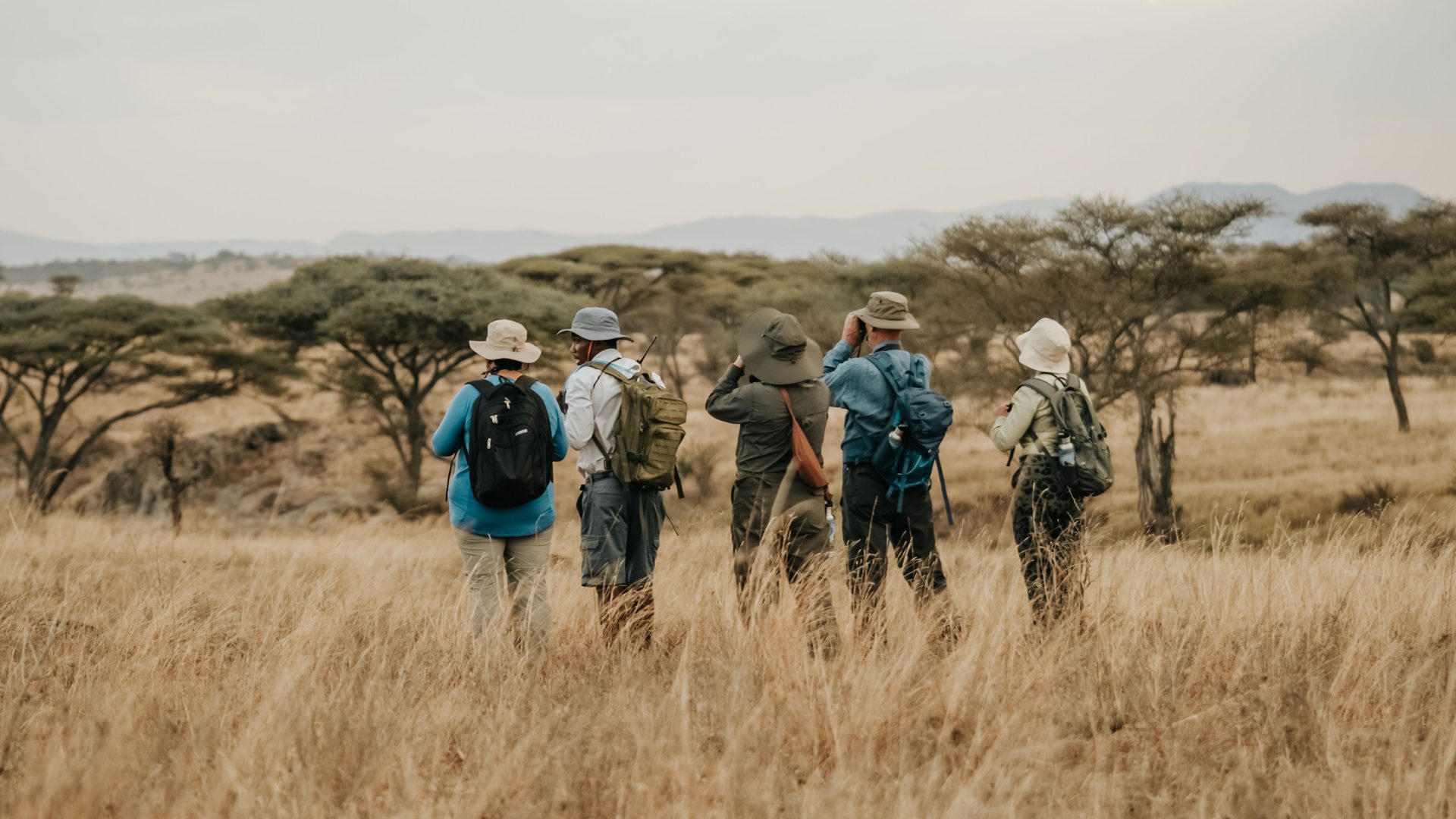
On a day when you aren’t visiting the crater, you might want to take a guided bush walk along the rim.
Visiting the western edge of the crater in particular offers panoramic views of the woodlands, open grasslands, and acacia forests. You can also watch the Maasai as they take their cattle out to graze or return them to the kraals at dusk.