Hadzabe Culture in Tanzania
One of the World’s Last Hunter-Gatherer Societies
The Hadzabe people of Tanzania represent one of the oldest and most distinctive living cultures in Africa. Unlike pastoral or agricultural communities, the Hadzabe maintain a hunter-gatherer way of life that has changed remarkably little over tens of thousands of years. Their culture is built on deep ecological knowledge, equality, and a direct relationship with the natural world.
For travelers seeking cultural tours in Tanzania that go beyond observation, learning about the Hadzabe offers a rare opportunity to understand humanity’s earliest ways of living. When approached respectfully and ethically, Hadzabe cultural experiences are powerful, humbling, and deeply educational.
Who the Hadzabe are and where they live
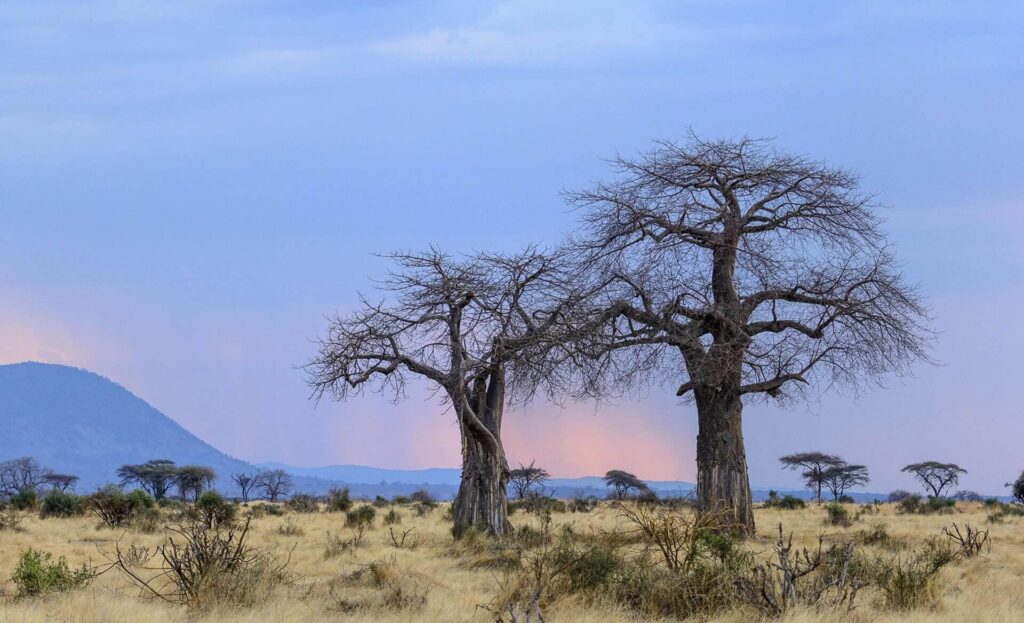
The Hadzabe (also spelled Hadza) are an indigenous hunter-gatherer community living primarily around Lake Eyasi in northern Tanzania, near the southern edge of the Serengeti ecosystem. Their homeland consists of savannah, woodland, and rocky terrain that provides wild food sources year-round.
Unlike many other Tanzanian communities, the Hadzabe do not practice farming or livestock keeping. Their mobility follows natural food availability rather than permanent settlements. This close dependence on land makes their culture inseparable from the surrounding environment.
History and Origins of the Hadzabe People
The Hadzabe are considered one of the oldest continuous human cultures on Earth. Genetic and linguistic research suggests their ancestry may stretch back tens of thousands of years, offering insight into early human societies.
Their language is unique and includes click consonants not related to Bantu, Nilotic, or Cushitic languages. Without a written tradition, Hadzabe history is passed orally through storytelling and lived experience. Despite outside pressures, their cultural continuity remains extraordinary.
Subsistence and Survival
Unlike pastoralist groups, cattle play no role in Hadzabe culture. The Hadzabe survive entirely through hunting wild animals and gathering natural foods such as berries, roots, tubers, and honey.
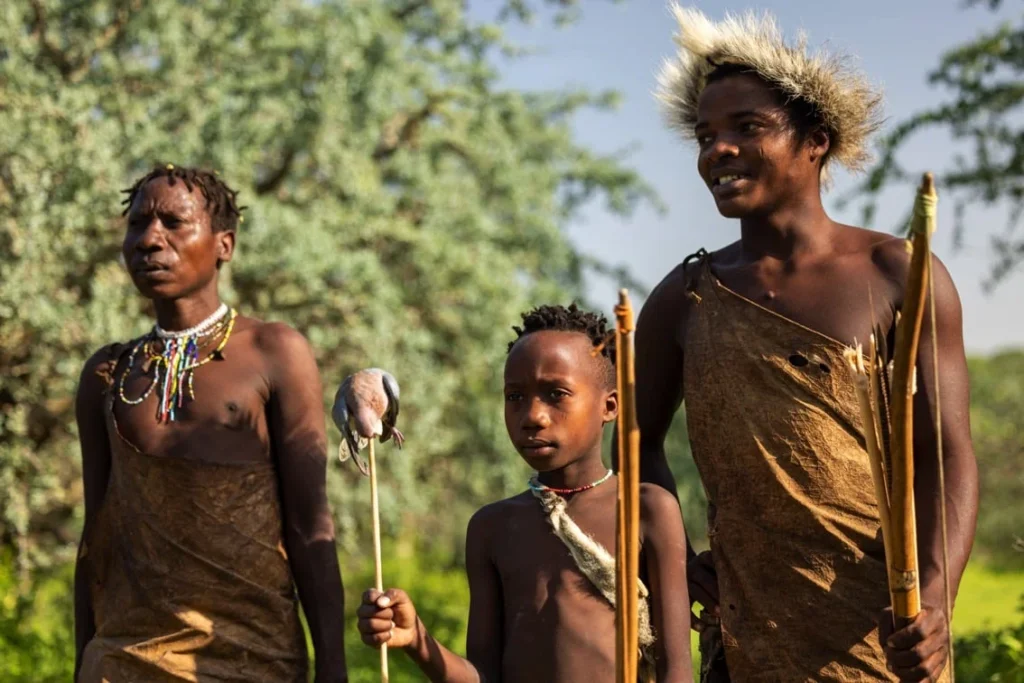
Men typically hunt using handmade bows and poison-tipped arrows, while women gather plant foods that form a significant part of the daily diet. This division of labor is practical rather than hierarchical, and food is shared freely within the group.
This lifestyle fosters independence, adaptability, and an intimate understanding of ecosystems qualities central to Hadzabe identity.
Social Structure, Equality, and Community Life
Hadzabe society is highly egalitarian. There are no formal chiefs, age sets, or rigid leadership structures. Decisions are made through discussion and consensus, and individuals are free to move between camps.
Status is not accumulated through wealth or authority, but through skill, generosity, and experience. This social balance minimizes conflict and reinforces cooperation. Children learn through observation rather than formal instruction, gaining knowledge naturally over time.
Traditional Dress and Material Culture
Traditional Hadzabe clothing has historically been minimal and functional, made from animal hides and natural materials. Today, some individuals wear modern clothing obtained through trade or tourism, while others maintain traditional attire depending on context.
Adornment is simple and practical rather than symbolic. Tools such as bows, arrows, digging sticks, and fire-making equipment hold greater cultural importance than decorative items. These tools reflect survival knowledge passed down across generations.
Daily Life in a Hadzabe Camp
The Hadzabe do not live in permanent villages or bomas. Instead, they form small, temporary camps near food sources. Shelters are lightly constructed and easily abandoned when resources shift.
Daily life is flexible. Hunting and gathering take place in the morning, followed by rest, storytelling, and social interaction. Evenings often center around shared meals and conversation. Life moves at a natural pace shaped by environment rather than schedules.
For visitors, this rhythm offers a rare contrast to modern life—one grounded in immediacy, presence, and cooperation.
Beliefs, Rituals, and Spiritual Worldview
Hadzabe spiritual beliefs are closely tied to nature. Rather than structured ceremonies or formal rites of passage, their worldview emphasizes balance, respect, and awareness of unseen forces within the landscape.
Storytelling, humor, and song play important roles in cultural expression. Rituals are informal and situational, reflecting a belief system that is lived daily rather than enacted ceremonially.
The Hadzabe Relationship with Land, Wildlife, and Nature
The Hadzabe relationship with nature is one of coexistence, not control. Wildlife is hunted selectively and respectfully, and nothing is taken unnecessarily. Their deep knowledge of animal behavior, plants, and seasonal patterns reflects thousands of years of observation.
This sustainable relationship has allowed the Hadzabe to live with minimal ecological impact. Their way of life offers valuable lessons in conservation, restraint, and environmental stewardship.
How Hadzabe Culture Adapts to the Modern World
Modern pressures—including land loss, tourism, and economic change—have challenged Hadzabe traditions. Some community members now engage selectively with tourism, education, or trade to support their families.
Adaptation does not mean abandonment of identity. Many Hadzabe continue to practice hunting and gathering while navigating limited interaction with the modern economy. Respecting this balance is essential when engaging with their culture.
Responsible and Ethical Ways to Visit Hadzabe Communities
Visiting the Hadzabe requires sensitivity and ethical awareness. Responsible cultural tours are community-approved, guided by local interpreters, and designed to minimize disruption.
Travelers should avoid treating visits as performances or photo opportunities. Asking permission, listening carefully, and supporting ethical operators ensures visits remain respectful and beneficial. When done properly, tourism can help protect Hadzabe land rights and cultural continuity.
Why Hadzabe Cultural Experiences Matter in Tanzania
Experiencing Hadzabe culture challenges assumptions about progress, success, and sustainability. Their way of life offers a rare perspective on humanity’s origins and the value of living in balance with nature.
For travelers, time spent learning about the Hadzabe often becomes one of the most thought-provoking parts of a Tanzania journey not because it is exotic, but because it is deeply human.
Other Cultural Tours
Mikumi National Park
Nyerere National Park