
Stone Town
Tour Overview
A Stone Town Tour is not something you rush between the beach and the airport. It’s not a quick sightseeing stop or a box to tick. Stone Town is the emotional and historical core of Zanzibar, and spending time here reshapes how you understand the island as a whole. Long before Zanzibar became known for white-sand beaches and turquoise water, this dense coastal town was already a global crossroads where Africa met Arabia, India, and Europe.
Walking through Stone Town feels intimate and intense. The streets are narrow, sometimes barely wide enough for two people to pass. Life spills outward children playing, women chatting from balconies, the smell of cardamom and frying seafood drifting from unseen kitchens. The town does not perform for visitors. It continues its routines, and you are the one passing through.
A Stone Town Tour matters because it gives context. Without it, Zanzibar can feel like a beautiful surface. With it, the island becomes layered, complicated, and deeply human. This is an experience that helps you understand where Zanzibar has been, what it has endured, and how it continues to live with its history.
What a Stone Town Tour Is Really About
At its heart, a Stone Town Tour is about stories some proud, some painful, many unresolved. The town was shaped by centuries of trade across the Indian Ocean. Merchants arrived with spices, textiles, ideas, and religions. Empires rose and fell. Fortunes were built, often at terrible human cost.
Unlike many historic districts elsewhere, Stone Town is not frozen in time. People live here. Families occupy the same coral-stone buildings their ancestors did. Mosques, churches, and Hindu temples still serve active communities. That continuity makes the experience feel real rather than staged.
What makes this tour unique in Zanzibar is how tightly everything is woven together. Architecture, religion, language, food, and memory all coexist in a compact space. You are not just learning history you are walking through its consequences. Compared to old towns in places like Fez or Cairo, Stone Town is smaller and less monumental, but far more personal. It invites conversation rather than spectacle.
Where Stone Town Sits in Zanzibar and Why That Matters
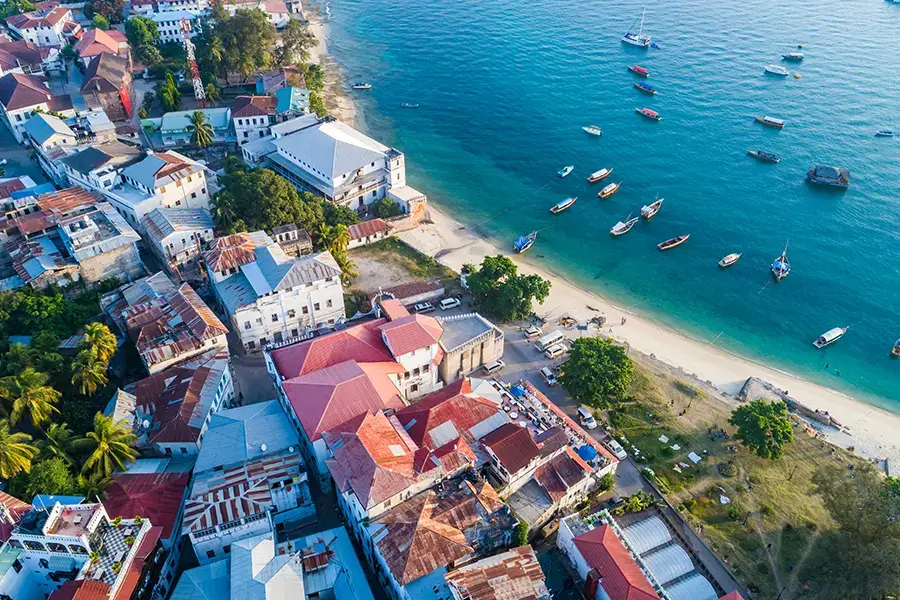
Stone Town forms the old quarter of Zanzibar City on the western coast of Unguja Island. Facing the Indian Ocean, it was historically the island’s main port and point of contact with the wider world. That orientation toward the sea shaped everything: the economy, the architecture, even the layout of the streets, which channel breezes inland to ease the heat.
The town’s buildings are constructed mainly from coral rag and lime, materials sourced locally but influenced by foreign design. Wooden balconies, shaded courtyards, and carved doors reflect Omani, Indian, and Swahili traditions blended together.
Distances in Zanzibar can be deceptive, but Stone Town is close to everything that matters logistically. It is about 15 minutes from the airport and the ferry terminal. From beach areas like Nungwi, Kendwa, or the east coast, the drive usually takes between one and one-and-a-half hours. Because of this, many travelers treat Stone Town as a brief stop. That’s a mistake. Its density rewards time and attention far more than distance suggests.
The History That Shaped Stone Town
Trade, Power, and the Indian Ocean World
For centuries, Stone Town sat at the center of Indian Ocean trade routes. Dhows arrived with dates, textiles, and porcelain, and departed with cloves, ivory, and timber.
When Omani rulers established Zanzibar as their capital in the 19th century, Stone Town became a political and commercial powerhouse. Palaces, forts, and grand homes were built, many of which still stand today, weathered but dignified.
The Slave Trade and Its Lasting Impact
Any honest Stone Town Tour must confront the town’s role in the East African slave trade. Thousands of enslaved people passed through Zanzibar, many held, sold, and transported under brutal conditions. Sites connected to this history are sobering, and they should be approached with seriousness and respect.
A Living Swahili Culture, Not a Museum
Despite its history, Stone Town is not defined only by the past. Swahili culture remains vibrant here. Kiswahili is spoken everywhere. Daily prayers structure the rhythm of life. Music, poetry, and storytelling continue to evolve. Preservation matters not because Stone Town is old, but because it is alive.
Getting to Stone Town
Coming from the Airport
Zanzibar International Airport is just outside the city. A taxi or hotel transfer usually takes 15 minutes, depending on traffic. The transition from runway to old town is abrupt you move quickly from open space into dense urban life.
Traveling from Beach Resorts
Most beach resorts arrange transfers to Stone Town, either privately or as part of a tour. The drive offers a look at everyday Zanzibar beyond tourist zones: villages, roadside markets, schools, and farms.
What the Journey Is Like
Once you arrive, vehicles largely disappear. Stone Town is explored on foot. Streets are uneven, narrow, and sometimes crowded, which can be challenging but also part of the charm. The town reveals itself gradually, not all at once.
What Actually Happens on a Stone Town Tour
A typical Stone Town Tour unfolds slowly. There is no single correct route, and good guides adapt their pace to the group and the day’s conditions.
You usually begin near the waterfront, learning about Zanzibar’s role as a port and the importance of maritime trade. From there, you move inward, away from open space and into the maze of alleys. Guides point out carved doors, explaining how patterns and brass studs once signaled status and origin.
Markets provide sensory overload fish laid out on stone slabs, vendors calling out prices, baskets of tropical fruit stacked high. You may visit historic buildings, former palaces, or religious sites, depending on the route.
The most reflective moments often come when discussing the slave trade. Guides usually slow the pace here, giving space for questions and silence. The tour often ends near Forodhani Gardens, where the town opens back up to the sea and the mood shifts toward evening social life.
Walking is steady but manageable. Heat and humidity are the biggest challenges rather than distance.
When Stone Town Is at Its Best
Stone Town can be visited year-round, but conditions change the experience. The cooler, drier months from June to October and January to February are most comfortable for walking. March to May brings heavier rains, which can make streets slippery and tours less enjoyable, though crowds are thinner.
Mornings are ideal. Temperatures are lower, markets are active, and the town feels awake rather than worn down by the heat. Afternoon tours can work, especially if they end around sunset, but they require more stamina.
Peak travel seasons bring more visitors but also better access to museums and restored sites. Quieter months offer a more local feel but fewer open attractions.
Who Will Enjoy a Stone Town Tour Most
This experience suits travelers who value understanding over entertainment. Couples often enjoy the shared discovery. Solo travelers find it grounding and socially engaging. Families with older children benefit from the educational depth.
Physical fitness requirements are modest, but patience and curiosity are essential. Travelers expecting a polished, lighthearted attraction may find the experience intense. Those willing to engage with difficult history usually find it deeply rewarding.
Older travelers can enjoy the tour with breaks and shorter routes, though sensitivity to heat should be considered.
What to Wear and What to Carry
Light, breathable clothing that covers shoulders and knees is both respectful and practical. Comfortable walking shoes are essential uneven stone streets are hard on flimsy sandals.
Bring water, sunscreen, and a hat. A small bag is useful, but avoid carrying valuables unnecessarily. A scarf can help with modesty when entering religious spaces or protection from sun.
Cameras are welcome, but discretion matters. Always ask before photographing people.
What’s Usually Included and What Isn’t
Most guided Stone Town Tours include a licensed local guide and entrance fees to major historic sites. Private tours allow flexibility and deeper conversation, while shared tours move faster and cost less.
Food, drinks, tips, and optional museum photography fees are usually extra. Transfers from beach resorts may or may not be included, depending on the operator.
Staying Safe and Being Respectful in Stone Town
Stone Town is generally safe, but crowded areas require awareness. Keep belongings secure and avoid drawing unnecessary attention to valuables.
Respect is more than politeness here. Dress modestly, speak quietly in residential areas, and follow your guide’s advice in sensitive locations. Remember that this is a living town, not an open-air exhibit.
Things Most Visitors Only Learn After They Leave
Many travelers wish they had allowed more time. Stone Town is mentally and emotionally rich, and squeezing it between flights does it no favors.
Choosing the right guide matters enormously. A knowledgeable local guide transforms confusion into insight. Without one, much of the town’s meaning remains invisible.
Early mornings offer the best light and the fewest crowds. Carry small bills for purchases and tips. And don’t plan anything demanding immediately afterward you’ll want time to process what you’ve seen.
How a Stone Town Tour Fits into a Zanzibar Trip
A Stone Town Tour works best at the beginning of a Zanzibar itinerary. It provides cultural grounding before days of beach relaxation. As a half-day activity, it pairs well with a relaxed afternoon or an evening at Forodhani Gardens.
Combined with a spice farm visit or a trip to nearby islands, it can anchor a full day without feeling rushed. During a beach-focused holiday, it offers contrast and depth.
Stone Town is not an optional add-on. It is the key to understanding Zanzibar itself. Once you have walked its alleys, listened to its stories, and felt its rhythms, the island’s beauty takes on meaning beyond the shoreline and that understanding stays with you long after you leave.