Jozani Forest
Tour Overview
A visit to Jozani Forest feels like stepping into a quieter, older version of Zanzibar. Away from the coast and the crowds, the air shifts. It becomes cooler, heavier with moisture, and alive with unfamiliar sounds rustling leaves, distant calls, the sudden movement of something unseen above you.
Jozani Forest is not a dramatic wilderness. There are no towering mountains or vast landscapes. Its power is subtle. This is a place where life thrives quietly, adapted to an island environment that has been shaped by isolation and change. Walking here gives you a sense of how Zanzibar might have felt before roads, resorts, and towns took over much of the land.
This experience matters because it reveals a side of Zanzibar many travelers never see. Jozani is about conservation, coexistence, and the fragile balance between people and nature on a small island. It offers perspective and a pause within a beach-focused itinerary.
What a Visit to Jozani Forest Is Really About
Jozani Forest is about observation rather than action. You’re not here to conquer terrain or chase adrenaline. You’re here to notice. The forest asks you to slow down, lower your voice, and pay attention to what moves quietly above and around you.
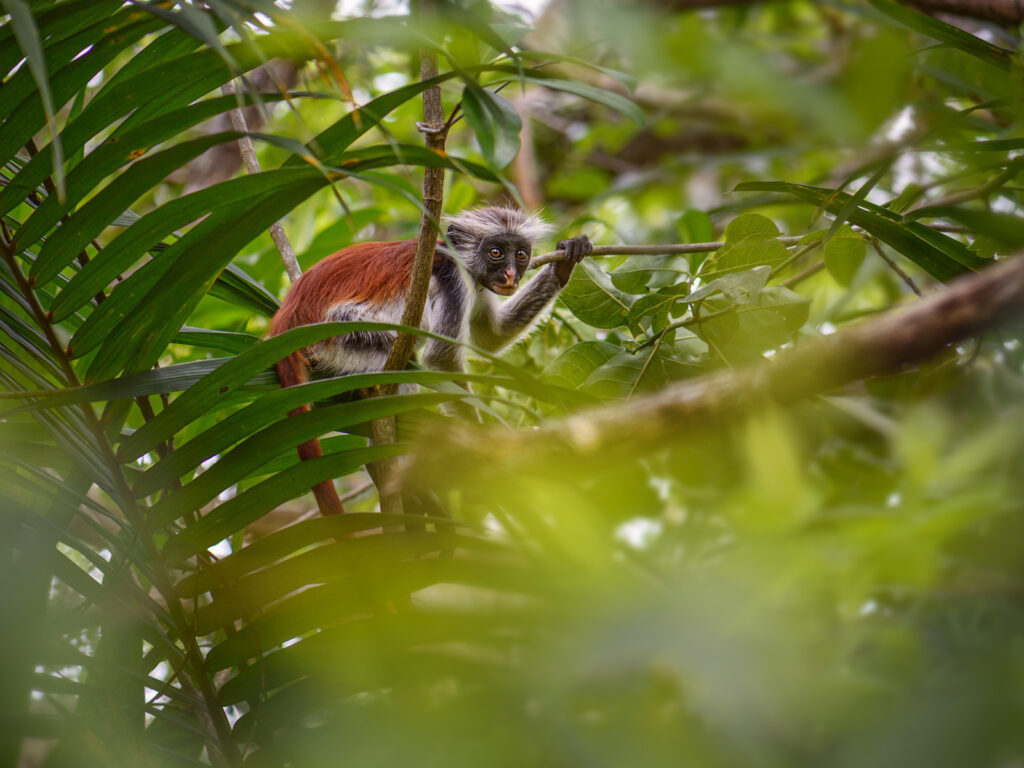
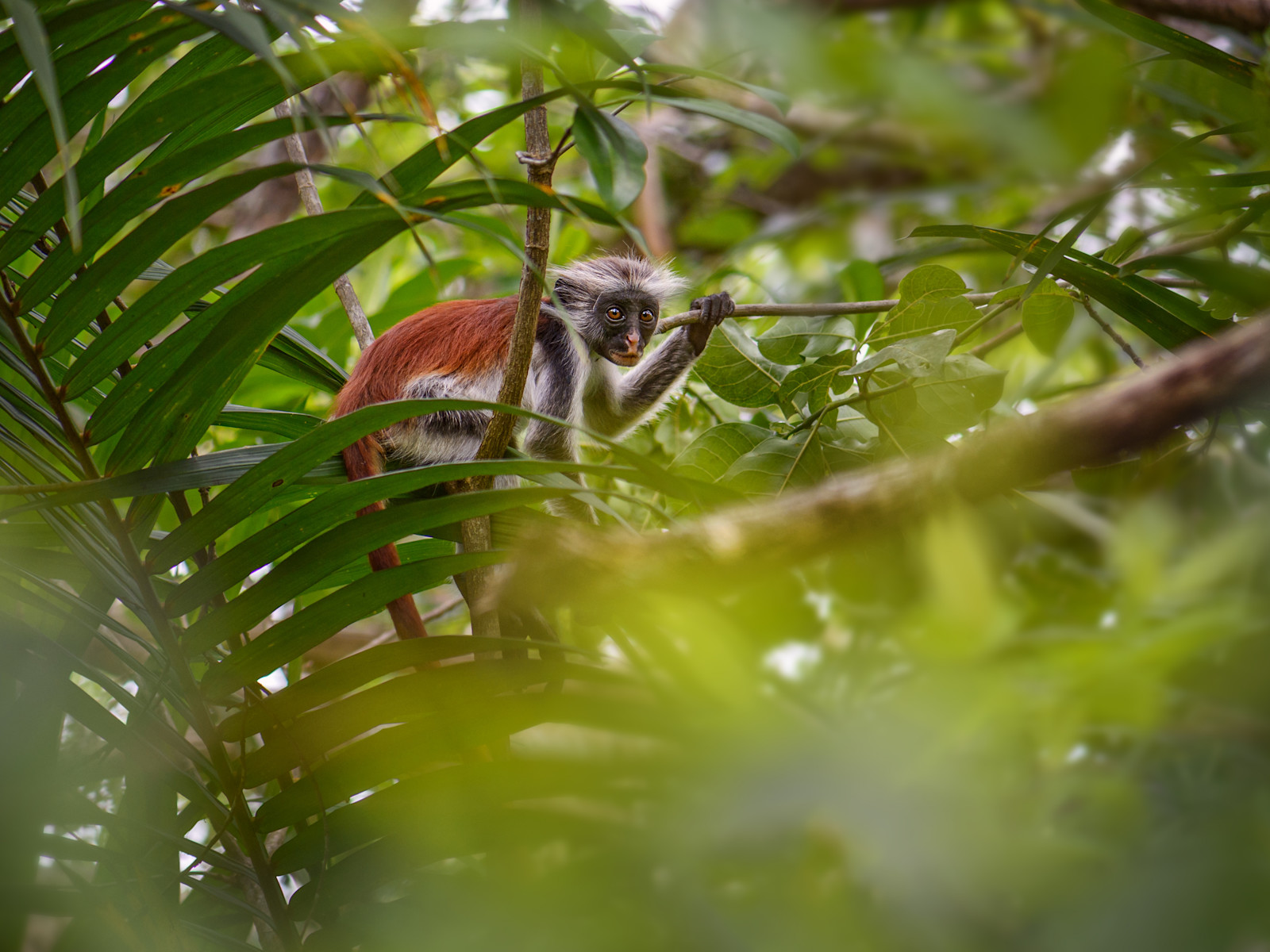
The star residents are the Zanzibar red colobus monkeys, a species found nowhere else in the world. Watching them move through the canopy leaping effortlessly, pausing to study you with calm curiosity is a reminder of how specialized island ecosystems can be. Their survival depends entirely on places like Jozani remaining intact.
Beyond wildlife, the experience is about understanding how forests support everyday life in Zanzibar. The trees regulate water, protect coastlines, and provide resources that communities have depended on for generations. Jozani is not separate from human life; it is woven into it.
Where Jozani Forest Is Located
Jozani Forest lies in the central-eastern part of Unguja Island, within Jozani Chwaka Bay National Park. This protected area sits between the east coast beaches and Stone Town, making it an easy inland detour.
From Stone Town, the drive takes about 45 minutes. From beach areas like Paje, Jambiani, or Michamvi, it’s often less than 30 minutes. The approach is gradual roads narrow, villages thin out, and greenery thickens.
The forest itself is low-lying and humid. Boardwalks and dirt paths guide visitors through different habitats, including tropical forest and mangrove ecosystems. It’s compact but surprisingly diverse.
The Natural and Cultural Importance of Jozani
Jozani Forest protects one of Zanzibar’s last remaining indigenous forests. Much of the island’s original woodland has been cleared for farming and development, making Jozani critically important for biodiversity.
The red colobus monkeys are the most famous residents, but they share the forest with bush babies, blue monkeys, duikers, butterflies, and dozens of bird species. Plant life is equally varied, with medicinal trees and hardwoods used traditionally by local communities.
Equally important is the relationship between the forest and surrounding villages. Conservation here is community-based. Local people are involved in protecting the forest and benefit directly from tourism. Visiting Jozani supports an approach that values coexistence rather than exclusion.
Getting to Jozani Forest
Traveling from Stone Town
Most visitors travel to Jozani Forest by car or minibus from Stone Town. Many tours include transport, or you can arrange a taxi. The journey passes through villages and farmland, offering a glimpse into everyday rural life.
Coming from Beach Resorts
From the east coast, Jozani is one of the most accessible inland excursions. Transfers are quick and straightforward, making it an easy half-day outing.
What the Drive Is Like
Roads are mostly paved and in good condition. Traffic is light once you leave urban areas. The drive itself helps you understand how quickly Zanzibar transitions from town to countryside.
What Happens During a Jozani Forest Visit
A typical visit to Jozani Forest lasts two to three hours. Upon arrival, a local guide leads you along established trails. Guides are knowledgeable and trained to spot wildlife you might otherwise miss.
The walk begins in the tropical forest, where red colobus monkeys are often seen close to the path. They are accustomed to humans and usually remain calm, allowing for observation without disturbance.
Later, many visits include the mangrove boardwalk near Chwaka Bay. Elevated wooden paths take you through tangled mangrove roots, with explanations about how these ecosystems protect coastlines and support marine life.
Walking is easy and slow-paced. Paths are mostly flat, and stops are frequent. The focus is on learning rather than covering distance.
When Jozani Forest Is at Its Best
Jozani Forest is open year-round, but conditions change with the seasons. The dry months from June to October and January to February are most comfortable, with less humidity and firmer trails.
During the rainy season, the forest becomes lush and vibrant, but paths can be muddy and insects more active. Wildlife remains visible, though conditions feel more tropical and intense.
Morning visits are best. Animals are more active, temperatures are cooler, and the forest feels quieter. Afternoon visits are possible but warmer and slightly busier.
Who Will Enjoy Jozani Forest Most
Jozani Forest is ideal for travelers who appreciate nature and conservation. Families enjoy the accessible walking and engaging wildlife. Couples and solo travelers often find the experience calming and reflective.
No high fitness level is required, making it suitable for most ages. Elderly travelers usually manage well with steady pacing and breaks.
Those expecting dramatic scenery or large animals may feel underwhelmed. Jozani’s beauty lies in its subtlety and ecological significance rather than spectacle.
What to Wear and What to Carry
Wear lightweight, breathable clothing suitable for humid conditions. Long sleeves and trousers help protect against insects. Comfortable walking shoes are important, especially after rain. Bring water, insect repellent, and sunscreen. A hat is useful, though the canopy provides shade. Cameras are welcome, but keep noise to a minimum to avoid disturbing wildlife.
What’s Usually Included and What Isn’t
Most Jozani Forest tours include park entrance fees and a local guide. Transportation may or may not be included, depending on where you’re staying. Food and drinks are not included, and there are limited facilities on-site. Tips for guides are appreciated but optional.
Safety, Ethics, and Responsible Wildlife Viewing
Stay on designated paths and follow your guide’s instructions. Feeding or touching animals is not allowed. Flash photography should be avoided around wildlife. Respect the forest as a protected space. Littering, loud behavior, and removing plants are prohibited. Conservation here depends on visitor cooperation.
Things Many Visitors Don’t Expect
Many travelers are surprised by how close the monkeys come to the path. This is normal behavior and not a sign they are tame maintain distance and let them move freely.
The mangrove section is often overlooked but offers valuable insight into Zanzibar’s coastal ecology. Don’t rush past it.
The forest feels different depending on the weather. Light rain can enhance the experience, adding sound and texture to the environment.
How a Jozani Forest Visit Fits into a Zanzibar Itinerary
Jozani Forest works perfectly as a half-day excursion. It pairs well with beach time, especially on the east coast, where travel time is minimal. Many travelers visit in the morning and return to the coast by lunchtime.
Combined with a spice farm or village visit, it creates a balanced inland day that contrasts nicely with seaside relaxation.
Jozani Forest doesn’t demand attention it earns it quietly. It shows you a Zanzibar that survives beyond the shoreline, shaped by resilience, adaptation, and a careful relationship between people and nature. That understanding stays with you long after you leave the forest behind.